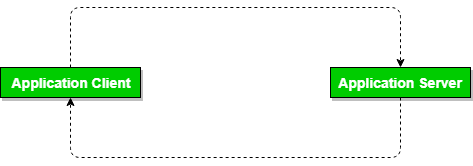
Two Level Architecture
Two level architecture is similar to a basic
client-server
model. The application at the client end directly communicates with the database at the server side. API's like ODBC,JDBC are used for this interaction. The server side is responsible for providing query processing and transaction management functionalities. On the client side, the user interfaces and application programs are run. The application on the client side establishes a connection with the server side in order to communicate with the DBMS.
An
advantage
of this type is that maintenance and understanding are easier, compatible with existing systems. However, this model gives poor performance when there are a large number of users.
DBMS 3-tier Architecture
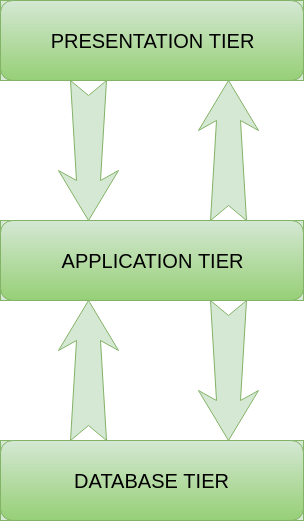
DBMS 3-tier architecture divides the complete system into three inter-related but independent modules as shown in Figure below.
Presentation or User Tier:
This tier is presented before the user of who knows nothing regarding the other existing complex databases underneath. This tier can provide multiple views of the databases, generated by the application residing in the application tier.
Application Tier:
This is the middle lined tier between the Database and the Presentation tier and acts as a connection between the end-user and the database. This tier holds the programs and the application server along with the programs that could access the database. This is the last layer that the users are made aware of. It provides a complete abstraction to the database layer.
Database Tier:
This tier holds the primary database along with all the data and the query languages for processing. The relations of data with there constraints are also defined in this level.
Advantages: